Blog 2: PFAS Regulations Are Reshaping the Water Treatment Industry – Here’s What You Need to Know
2026: The Year PFAS Rules Got Real
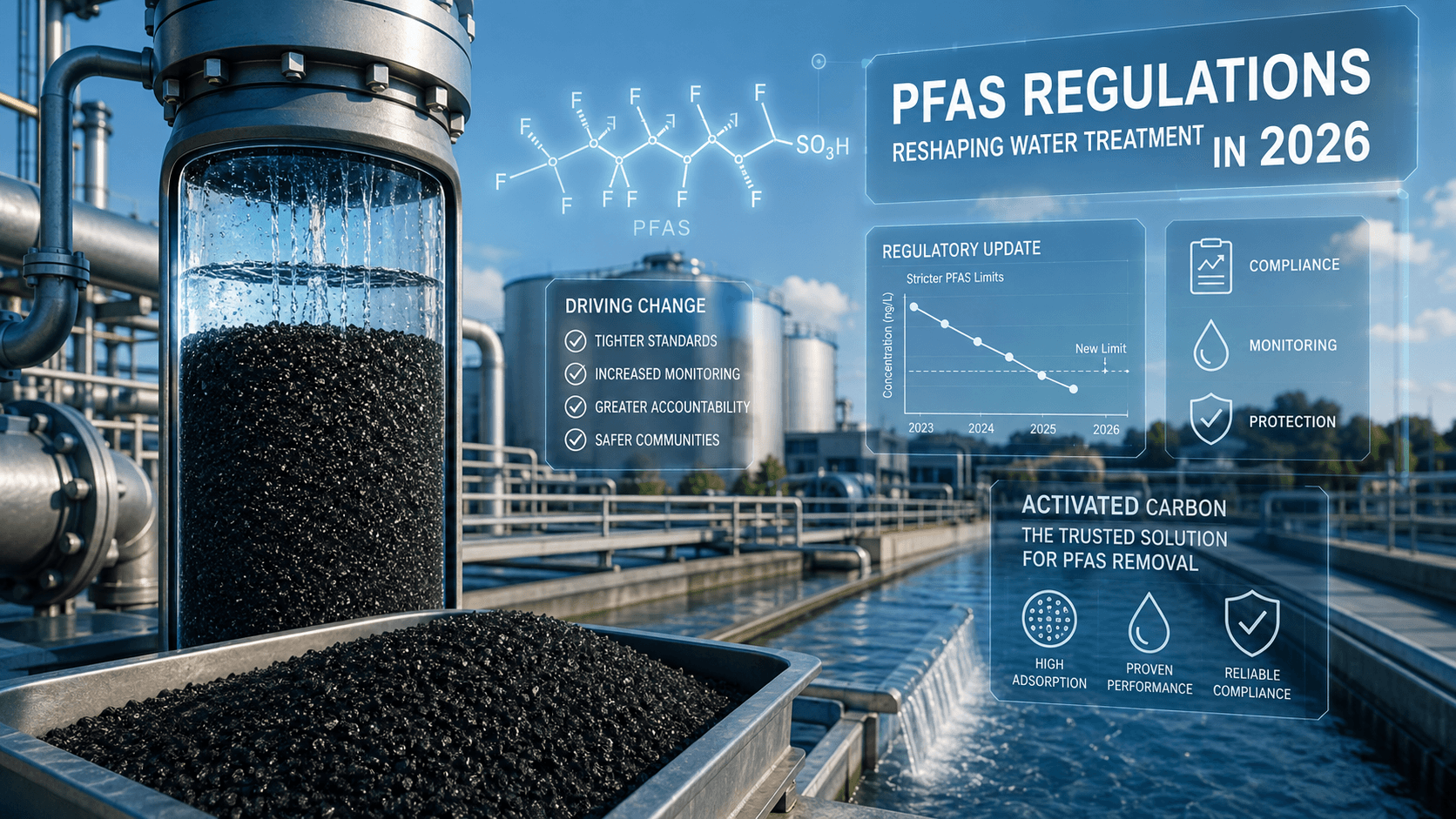
If you work in municipal water treatment, you’ve probably heard the acronym “PFAS” more times than you can count. But 2026 is the year these “forever chemicals” moved from a compliance concern to an operational imperative.
The recast European Union Drinking Water Directive took effect in January 2026, imposing binding limits on PFAS and mandatory monitoring and removal obligations across all member states for the first time. Meanwhile, in the United States, the EPA’s national drinking water standards for PFAS – including 4 parts per trillion maximum contaminant levels for PFOA and PFOS – have strengthened demand for carbon adsorption in municipal and industrial water systems.
The result? Thousands of water utilities are scrambling to find proven, cost-effective treatment solutions.
Why Activated Carbon Is the Go-To Solution
When it comes to PFAS removal, granular activated carbon (GAC) is designated by the EPA as a Best Available Technology (BAT). It’s also recognized as a best available technique for removing PFAS from drinking water in the UK.
But here’s the thing – simply throwing activated carbon at the problem isn’t enough. Utilities need to think about the full lifecycle: adsorption performance, media replacement schedules, and perhaps most importantly, what to do with the spent carbon.
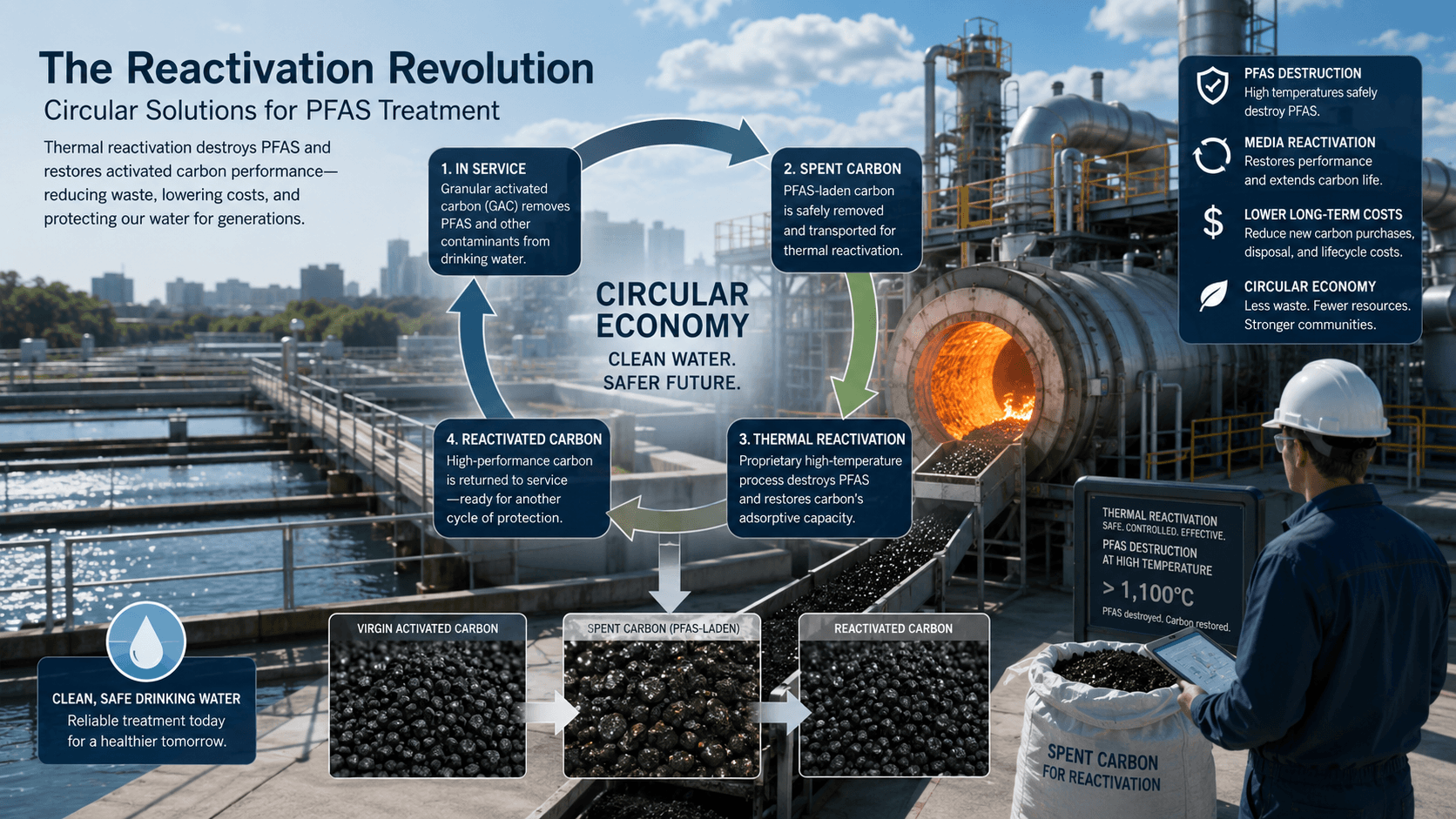
The Reactivation Revolution
This is where things get interesting. Calgon Carbon recently launched Filtrasorb® Rx, a premium reactivated carbon solution for municipal drinking water systems. What makes this noteworthy? The company’s reactivation process has demonstrated a measured Destruction Removal Efficiency greater than 99.9% for PFAS. That’s not just recycling – that’s destruction.
Third-party validated, peer-reviewed research showed that PFAS is destroyed during thermal reactivation of granular activated carbon. As Jenalle Brewer, Calgon Carbon’s Senior Vice President, put it: “Utilities are making PFAS treatment decisions they will live with for decades, and they are choosing partners who can prove their science”.
The Circular Economy Angle
The move toward circular activated carbon models through thermal reactivation and controlled spent-carbon management is one of the most significant structural shifts in the industry. Reactivation significantly reduces the costs associated with purchasing virgin carbon.
Finnish chemicals group Kemira recently finalized its acquisition of REPUR S.r.l., an Italian company that specializes in thermal reactivation of spent activated carbon for water treatment plants. This isn’t just a niche play – it’s a sign that major industry players see reactivation as a core part of the future.
The Bottom Line
PFAS regulations are here to stay, and they’re only going to get stricter. The European Chemicals Agency is expected to complete a broader restriction assessment by the end of 2026. For water utilities and industrial users, investing in high-quality activated carbon – and thinking strategically about reactivation – isn’t just good environmental practice. It’s becoming a business necessity.
Published by zhengzhou jinmai – helping you navigate the changing landscape of water treatment.